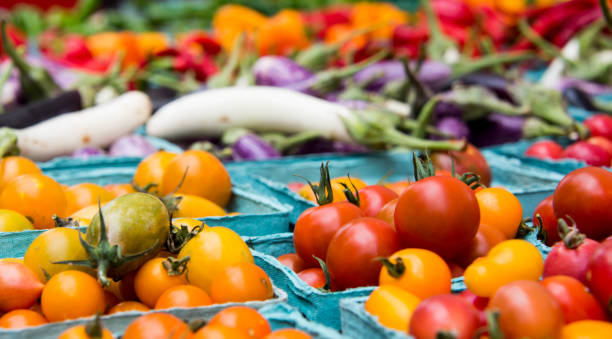
Why We Should Stop Calling Local Food "Expensive"
Why We Should Stop Calling Local Food "Expensive"
"It's a little expensive."
That's the thing people say most often when they're explaining why they don't buy local food more regularly. It comes up in conversations about farmers markets, local farms, and small food businesses constantly — a quiet, guilty explanation that assumes local food costs more and that this is the barrier.
The word "expensive" deserves a closer look.
Because expensive means something specific. It means the price is high relative to the value received. And when you actually examine what you're getting when you buy local food — and what you're getting when you buy the alternative at a conventional grocery store — the word stops making as much sense as we think it does.
What You're Actually Comparing
When someone says local honey is expensive, they're usually comparing it to a grocery store alternative that costs less per ounce. On a pure dollar-per-unit basis, the grocery store option wins.
But that comparison has a problem: it treats the two products as equivalent. And they're not.
The grocery store honey in that comparison is often a blend sourced from multiple countries, processed at high heat, and filtered to the point that many of the beneficial compounds that make raw honey valuable have been removed. It is a product engineered to look like honey, taste vaguely like honey, and cost as little as possible to produce and ship at scale.
The jar at the farmers market was in a hive in southern Idaho last month. It was extracted by the beekeeper who is standing in front of you. It's raw, local, and unfiltered. It contains pollen from local plants. It has a flavor that reflects exactly where it came from.
These are not the same product. Calling one expensive because it costs more than the other is like calling a home-cooked meal expensive because it costs more than fast food. The comparison only makes sense if you treat the outcomes as equivalent.
They're not.
What the Low Price Actually Costs
The thing about cheap food is that the cost doesn't disappear when the price is low. It just gets moved somewhere else.
It gets moved to the workers who harvest and process the food, often paid wages that wouldn't survive a close look. It gets moved to the animals, in the case of meat and dairy, who live in conditions that the low price makes unavoidable. It gets moved to the environment, in the form of industrial agricultural practices that prioritize yield over soil health, water quality, and biodiversity. It gets moved to rural communities, in the form of small farms being unable to compete and going under.
The cheap food is cheap because something — someone — absorbed the cost you didn't pay.
This isn't an argument that all cheap food is unethical or that everyone has the financial ability to buy exclusively local. Food access is a real and serious issue and it deserves to be treated with nuance. But for people who have the choice, it's worth understanding what the "cheap" price actually represents.
The Real Math
Here's a comparison worth running.
The average American household spends a significant amount every year on food that gets thrown away — produce that went soft, leftovers that never got eaten, things that got pushed to the back of the fridge and forgotten. The USDA estimates that American households waste somewhere between 30 and 40 percent of the food they purchase.
Now consider: local, seasonal produce bought in smaller quantities directly from a farmer tends to get used. Not always, not perfectly — but there's a psychological shift that happens when you've met the person who grew something and paid a fair price for it. You're more likely to use it. Less likely to let it sit and go soft.
If you're already throwing away a meaningful percentage of what you buy at the grocery store, the math on "expensive" local food starts to shift. You might be spending more per unit and wasting less overall — which means the total cost of actually feeding your household is closer than the sticker price suggests.
What Changes When You Reframe It
The language we use shapes what we're willing to consider.
When we call local food "expensive" we position it as a luxury — something for people who can afford to pay more for the same thing. When we start calling it what it actually is — more fully priced, more accurately valued, more honestly produced — it becomes something different. It becomes a choice about what we want to support with the money we spend on food.
That framing changes the question from "can I afford to buy local?" to "what do I want my food dollars to do?"
Do you want them to support the industrial system that has made food cheap and plentiful and, increasingly, less nutritious and less flavorful and less connected to any particular place?
Or do you want them to go to a farmer in southern Idaho who knows your name, who can tell you exactly when the honey was harvested, and who will be back at the market next Saturday?
Both are available to you. The price difference is real. But so is the difference in what you get — and what you're supporting — when you choose.
A Different Way to Think About It
Instead of asking "is local food worth the extra cost?" — try asking: what is this food actually worth?
Worth to you, for the quality and the flavor and the story it carries. Worth to the person who grew it, for the labor and the skill and the land and the years of practice it required. Worth to the community, for what it means when local farms survive and local food systems stay intact.
Price and worth aren't the same thing. They often aren't even close.
Local food isn't expensive. It's honest, more fresh, and a great way to support your local infrastructure.
Happy Idaho makes it easier to find local Idaho farmers, makers, and food businesses doing the real work. Browse the vendor directory and find your nearest market at happyidaho.com/find-local
