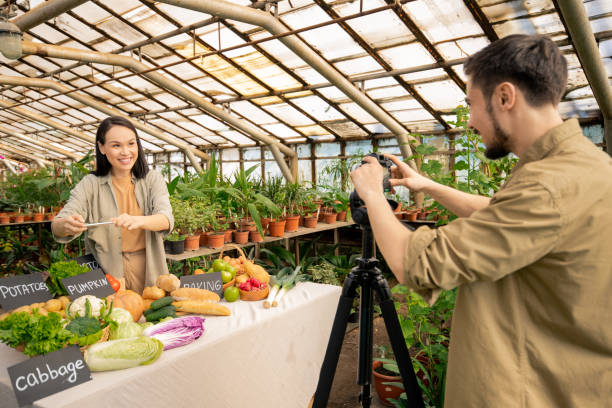
Why Behind-the-Scenes Content Outperforms Product Posts Every Time
Why Behind-the-Scenes Content Outperforms Product Posts Every Time
Here's a pattern almost every local vendor notices eventually:
The post you spent an hour setting up — perfect lighting, clean background, professional-looking product photo — gets 40 likes and no comments.
The photo you took in fifteen seconds of your messy workbench, your hands covered in something, your products half-finished — gets saved, shared, and replied to by people you've never heard of.
This is not an accident. It's not random. And it's not going to change — because the reason behind-the-scenes content outperforms product content is psychological, not algorithmic.
Understanding why it works makes you better at using it.
The Trust Economy
Social media in 2026 is running on a trust deficit.
People have been sold to, marketed at, and algorithm-fed enough professional-looking content that their defenses are permanently up. When they see a polished product photo with a strategic caption, some part of their brain registers: ad. And the ad-detection mechanism kicks in — scroll, ignore, move on.
Behind-the-scenes content bypasses that mechanism. When someone sees a real workspace, a real process, a real moment of something being made — the brain reads it as authentic. Not performed. Not curated. Real.
And real is what builds trust. Trust is what converts.
A product post tells someone what you sell. A behind-the-scenes post tells someone who you are. People buy from people they feel like they know — and they get to know you through the messy, unfiltered, in-progress moments you share, not through your best photos.
What Counts as Behind-the-Scenes
This is broader than most people think. It doesn't have to be dramatic or visually interesting. It just has to be real.
Process content. Anything that shows how what you make actually gets made. Hands kneading dough. Wax being poured into candle molds. Vegetables being harvested. Orders being packaged. The more specific the moment — the more it shows something real happening rather than something staged — the better it performs.
The before. The empty table before market setup. The car packed with product before you drive to the event. The kitchen before the baking starts. Before content creates narrative — it implies an "after" and makes people want to see it.
The imperfect moment. The batch that didn't turn out. The market day that was slow. The thing that took longer than expected. Imperfection is humanizing in a way that perfection isn't. When you share a real struggle — not for sympathy, just as honest documentation of what this work is like — people connect with you in a way they simply cannot connect with a product photo.
Decision-making. What you chose to bring to market this week and why. How you priced something. What you changed after last week didn't work. This type of content positions you as thoughtful and knowledgeable about your craft — and it makes followers feel like they're on the inside.
Your face. This is the most skipped category and the most powerful one. People follow people. When you appear on camera — even briefly, even imperfectly, even just for a few seconds of a talking-head clip — you become real to your audience in a way that a faceless product feed never will. The vendors who show their face regularly build more loyal, higher-converting followings than the ones who don't.
Why the Algorithm Rewards It
Behind-the-scenes content also performs better mechanically, not just psychologically.
It drives saves. When someone watches a time-lapse of a product being made and thinks "I want to show this to someone" or "I want to remember this" — they save it. Saves are one of the strongest engagement signals the algorithm uses to decide what to push further.
It drives shares. Content that feels real gets shared — forwarded in DMs to friends, reposted in Stories. Shares are now the single most powerful signal for algorithmic distribution on Instagram. Content that gets shared gets seen by thousands of people who don't follow you yet.
It drives comments. "What is that you're making?" "How long does that take?" "Where can I find you?" — behind-the-scenes content naturally invites questions in a way that product posts rarely do.
The Practical Setup
Behind-the-scenes content doesn't require setup. That's the point. Here's how to build the habit:
Film before you think. The next time you're in the middle of making something, packaging an order, setting up your booth — pick up your phone and press record before you have time to think about whether it's interesting. It almost always is.
Point the camera at your hands. Your hands doing something real is the most reliable behind-the-scenes visual. Close-up of hands is inherently more interesting than a wide shot of a scene.
Talk while you work. A thirty-second voiceover of what you're doing, why you do it this way, what you learned from the last batch — recorded while your hands are doing the work — is some of the best content a local vendor can post. It requires almost no setup and it documents something that is genuinely worth knowing.
Keep it short. Behind-the-scenes doesn't need to be long. Ten seconds of something real outperforms two minutes of something staged. You're giving people a window, not a documentary.
The Ratio Worth Aiming For
You don't have to abandon product posts. Product posts still serve a purpose — they show what you make and make it easy to buy.
But the ratio most local vendors have is backwards. They post mostly product content with occasional glimpses behind the scenes. The ratio that builds audiences and drives sales is closer to the opposite: mostly behind-the-scenes and process content, with occasional product-focused posts.
Think of it this way: behind-the-scenes builds the relationship. Product posts cash it in. You need both, but you need more of the first to make the second work.
Happy Idaho creates tools for local Idaho makers, farmers, and vendors who are ready to stop posting into the void. The Local Launch membership gives you monthly trending audio picks, 100 fill-in-the-blank hooks, and a community of local business owners doing this alongside you. $25/month.
→ Join at happyidaho.com/local-launch
