The Case for Real Food — Why What You Eat Matters More Than How Much
The Case for Real Food — Why What You Eat Matters More Than How Much
Most conversations about eating better are about quantity.
Eat less. Count calories. Track macros. Reduce portions. Limit this, restrict that, calculate the other thing.
These conversations aren't wrong, exactly. But they're missing something — something that becomes very clear when you eat a tomato grown in Idaho soil last week and compare it to a tomato that was picked green in Mexico six weeks ago, shipped across the country, and gassed with ethylene to turn red in a warehouse.
Both tomatoes are roughly the same number of calories. The difference between them has almost nothing to do with quantity.
What "Real Food" Actually Means
Real food is not a brand or a certification or a philosophy. It's a description.
Food that grew from soil or was raised on land or water. Food that hasn't been significantly processed — not stripped of its fiber, bleached of its color, fortified with synthetic vitamins to replace the natural ones that were removed, or preserved with compounds designed to give it a shelf life longer than some houseplants.
Real food spoils. That's actually the right sign. Food that can sit on a shelf for three years without anything growing on it is food that has been processed to the point where even microorganisms have decided it's not worth eating.
Most of what's in the middle aisles of a grocery store is not real food in this sense. Most of what's at a farmers market is.
Why Quality Matters More Than We've Been Told
The dominant framework for thinking about food for the past fifty years has been nutritionism — the idea that what matters about food is its nutritional components. Calories, protein, fat, carbohydrates, vitamins. This framework has given us food that is engineered to have the right numbers while being stripped of almost everything that made the original food worth eating.
Low-fat products that replaced fat with sugar. Fortified cereals that contain synthetic versions of vitamins that were present naturally in the whole grain before it was processed. Protein bars with ingredients lists that read like a chemistry textbook.
The problem is that food is not just a delivery mechanism for nutrients. It's a complex biological matrix — and the interactions between compounds in real food are so intricate and interdependent that we cannot fully replicate them by adding synthetic versions of individual nutrients to processed food.
A vitamin C supplement is not the same as a fresh orange. The fiber in a fiber supplement is not the same as the fiber in a whole vegetable. And the iron in a fortified grain product does not behave the same way in the body as the iron in grass-fed beef.
This isn't fringe science. It's increasingly mainstream nutrition research. And it points in the same direction: the quality of what you eat — how close it is to its original, whole form — matters enormously, in ways that calorie counting completely misses.
What Changes When You Eat Real Food Consistently
People who shift from predominantly processed food to predominantly real food typically report a cluster of changes that happen gradually over weeks and months:
Food tastes different — more interesting, more complex, more varied. This is partly because processed food is engineered to overstimulate taste receptors with salt, fat, and sugar, which blunts sensitivity to more subtle flavors. Real food re-calibrates that.
They feel full on less. Real food — especially vegetables, legumes, and whole grains — contains fiber and water that create satiety more effectively than processed food, which is often engineered to minimize satiety so you eat more.
Their relationship with food changes. When food tastes genuinely good, when you know where it came from and who grew it, when you have some connection to the season it was grown in — eating becomes a different kind of experience. Less compulsive, more satisfying.
The Local Food Connection
This is where farmers markets and local food producers become relevant to something bigger than Saturday morning shopping.
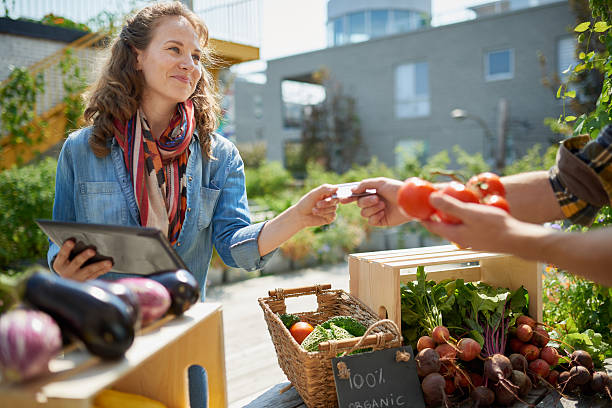
The food at your local farmers market is, almost by definition, real food. Vegetables grown in actual soil. Eggs from hens that went outside. Meat from animals that ate what they were supposed to eat. Bread made with simple ingredients and real fermentation. Honey that was in a hive last month.
None of this requires a philosophical commitment to a particular diet or food movement. It just requires choosing, as often as you reasonably can, food that looks like what it is — that hasn't been significantly altered between the farm and your kitchen.
That's not a rigid standard. It's not all-or-nothing. It's just a direction worth moving in.
A Simple Way to Start
The most practical change most people can make is also the simplest: add more real food before you start subtracting anything.
Add a local egg to breakfast. Add fresh vegetables from the market to dinner. Add raw honey to whatever you're already sweetening. Add a loaf of real sourdough to replace the commercial bread.
Don't start by restricting. Start by adding things that are genuinely better — that taste better, that satisfy you more, that you feel good about. The additions crowd out some of the less useful things naturally, without requiring discipline or deprivation.
Over time, you end up eating more real food not because you forced yourself to but because you discovered that it's actually better.
That's the whole case for real food. Not a lecture. Just an honest observation from anyone who has made the transition: you'll wonder why you waited.
Happy Idaho connects Idaho consumers with the local farmers, makers, and food producers growing and making real food in this state. Browse local vendors and find your nearest market at happyidaho.com/find-local
