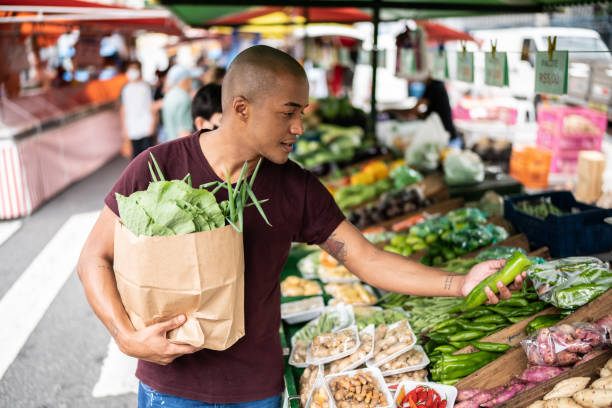
How to Make the Most of Your Farmers Market Visit
How to Make the Most of Your Farmers Market Visit
There's a version of the farmers market experience where you wander in, feel slightly overwhelmed, buy one thing you recognize, and leave feeling like you didn't quite get it.
And there's a version where you spend an hour talking to vendors, discover three things you've never tried, spend $40 and come home with enough food to anchor a week of genuinely good meals.
The difference between those two experiences isn't luck. It's a few small habits that make everything about the market more useful, more enjoyable, and more worth going back for.
Here's everything worth knowing — whether you're going for the first time or the fiftieth.
Before You Go
Go with a budget, not a grocery list.
The worst way to shop at a farmers market is to arrive with a specific list of things you need and try to find them. The market doesn't work like a grocery store. It works like a season — what's available reflects what's actually ripe right now, which changes week to week.
Bring a budget instead. Decide how much you want to spend and let that be your only constraint. Then let what looks good be your guide. This approach produces more interesting meals and less disappointment.
Go early for the best selection, go late for deals.
The first hour of a market typically has the best selection — especially for items that sell quickly, like pastured eggs, certain cuts of meat, and whatever bread the bakery brought in limited quantity.
The last hour often has deals — vendors who'd rather reduce their price than carry product home will frequently discount near closing time. If your goal is volume over variety, the last thirty minutes can be productive.
Bring cash and bags.
Most vendors now accept cards, but cash still makes transactions faster and is genuinely appreciated by smaller vendors who pay processing fees on every card transaction. Small bills are easier than large ones.
Bring your own bags. Canvas tote bags, a backpack, a cooler bag if you're buying meat or eggs. You'll need more carrying capacity than you think.
Go hungry (or at least not too full).
Markets that allow ready-to-eat food — which most do — are significantly more enjoyable when you arrive with appetite. The coffee vendor, the pastry table, the prepared food stalls — these are part of the experience and they're also useful fuel for an hour of walking and browsing.
While You're There
Walk the whole market before you buy anything.
Resist the urge to buy at the first table that looks good. Walk the whole market first — or at least most of it — before you start spending. This gives you a sense of what's available, what looks best today, and what might sell out before you loop back.
It also prevents buyer's remorse. Nothing is worse than spending your whole budget at the first three tables and then discovering the vendor you actually wanted to visit at the far end of the market.
Talk to the vendors.
This is the single most underused thing at farmers markets and the thing that most separates people who become market regulars from people who go once and don't return.
The person behind the table grew or made what you're looking at. Ask them about it. "What do you do with this?" and "What's been popular this week?" are both good starting points. Most vendors will give you a real answer — not a sales pitch, but a genuine recommendation — and the conversation usually leads to something interesting.
The best market finds come from conversations. The vendor who tells you that the purple variety of whatever they're selling is more flavorful than the one you were looking at, or who offers a sample of something you wouldn't have tried otherwise, or who mentions that they'll have something special next week — these interactions are the reason markets feel different from grocery stores.
Sample freely.
If samples are out, they're for you. Take them without guilt. If you want to try something that isn't displayed as a sample, ask — almost every vendor will offer one. Sampling before you buy is part of how markets work, and it's how you discover things you'd never have tried otherwise.
Don't be afraid to ask the obvious questions.
"Is this organic?" "Was this picked this week?" "How do you eat this?" "What's the difference between these two varieties?" — no question is too basic. Vendors answer versions of these questions every Saturday and most of them are glad to do it. You're showing interest, which is what vendors appreciate most.
The Most Useful Things to Buy at a Farmers Market
Not everything at a market is dramatically better than what you'd find at a grocery store. Here's where the quality difference is most pronounced:
Eggs. The difference between a recently laid egg from a small flock of pasture-raised hens and a grocery store egg is significant — in yolk color, white firmness, and flavor. If you buy nothing else from a local farm, buy eggs.
Seasonal produce. Anything that's harvested when it's ripe rather than weeks early for transportation. Summer tomatoes, stone fruit, berries, sweet corn, fresh peas — these are the items where "local" produces the most dramatic taste difference.
Bread from a small bakery. Genuine sourdough, whole grain loaves, and specialty breads from small bakeries at the market are made with simpler ingredients and no preservatives. They stale faster, which is the sign of something real.
Honey. Raw, local honey from a beekeeper you can talk to is a different product from what's sold in most grocery stores. Ask if it's raw and ask when it was harvested.
Meat and eggs directly from a farmer. When you can ask exactly how the animal was raised, what it ate, and how it was processed — and get a specific, credible answer — that transparency is worth paying for.
After the Market
Use what you bought within a few days, especially produce.
Farmers market produce is at or near peak ripeness when you buy it. That's its great advantage over grocery store produce — and it also means it won't last as long. Plan to cook around what you bought rather than fitting market purchases into a meal plan you made before you went.
The Saturday night dinner made mostly from whatever came home from the market is one of the more satisfying cooking experiences available to people who like to cook. It's not complicated. It just requires letting what's ripe be the guide.
Make It a Regular Thing
The market gets better the more often you go.
You start to recognize vendors. They start to recognize you. You learn which ones always have the best tomatoes, which one saves the good stuff for regulars, which one to ask about what's coming next week. The market becomes a weekly ritual rather than a one-time curiosity — and that's when it starts to genuinely change how you eat.
The best markets in the Treasure Valley run through most of the growing season. Happy Idaho keeps an updated calendar of markets across Idaho so you can find what's near you and what's on this week.
→ Find your nearest market at happyidaho.com/find-local
Happy Idaho connects Idaho consumers with the local makers, farmers, and vendors who are worth finding. Browse markets, events, and the vendor directory at happyidaho.com/find-local
